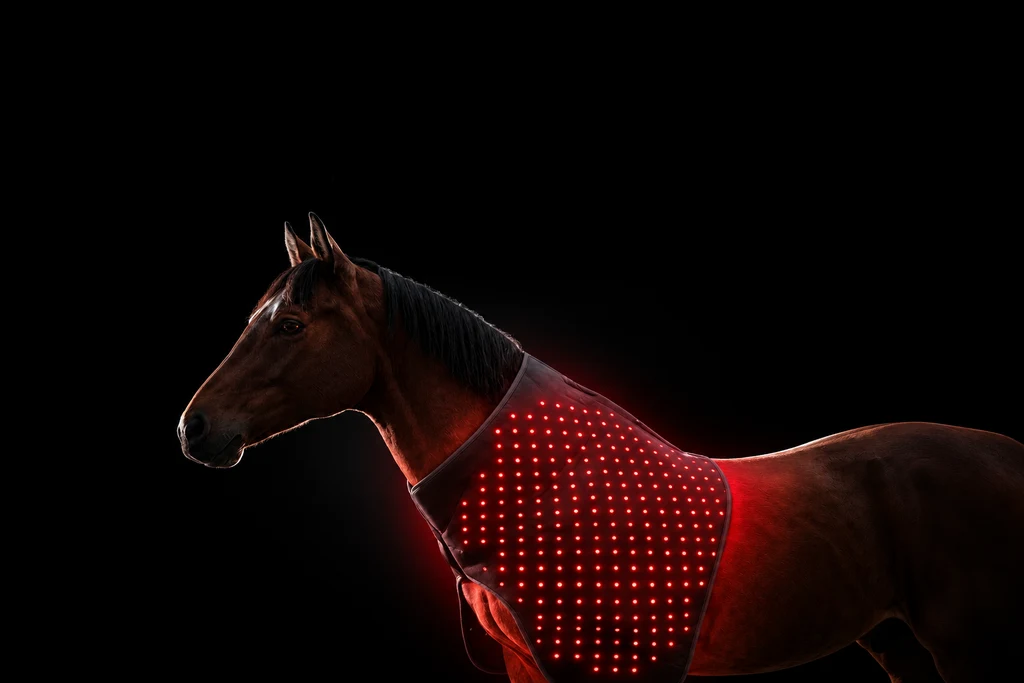
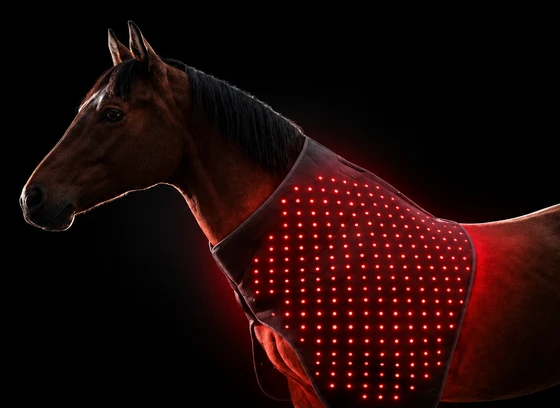
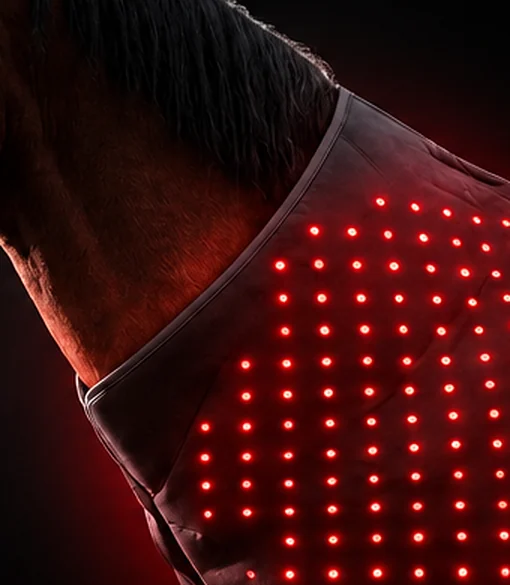
A bay performance horse in profile against black, wearing the PHAETHON equine red-light system — a panel of glowing red light emitters across the shoulder and barrel.

PHAETHON

Engineered
for longevity.

Equine Red-Light Therapy

01The equine athlete

The horse
is an athlete.

Power, speed, balance and grace, produced by muscle, skeleton and nervous system working as one. Recovery is part of performance.

Close portrait of a bay horse in profile, ears forward, lit from behind against black.

The program

  1. Breeding
  2. Genetics
  3. Nutrition
  4. Training
  5. Movement
  6. Performance
  7. Veterinary care
  8. Recovery

Horses are powerful equine athletes. Their strength, stamina, movement, and grace make them extraordinary competitors—but athletic performance places real demands on the body.

You develop the athlete.
Build recovery into the program.

Recovery deserves the same intentionality owners already give training, nutrition, breeding and performance.

Train. Recover. Repeat.

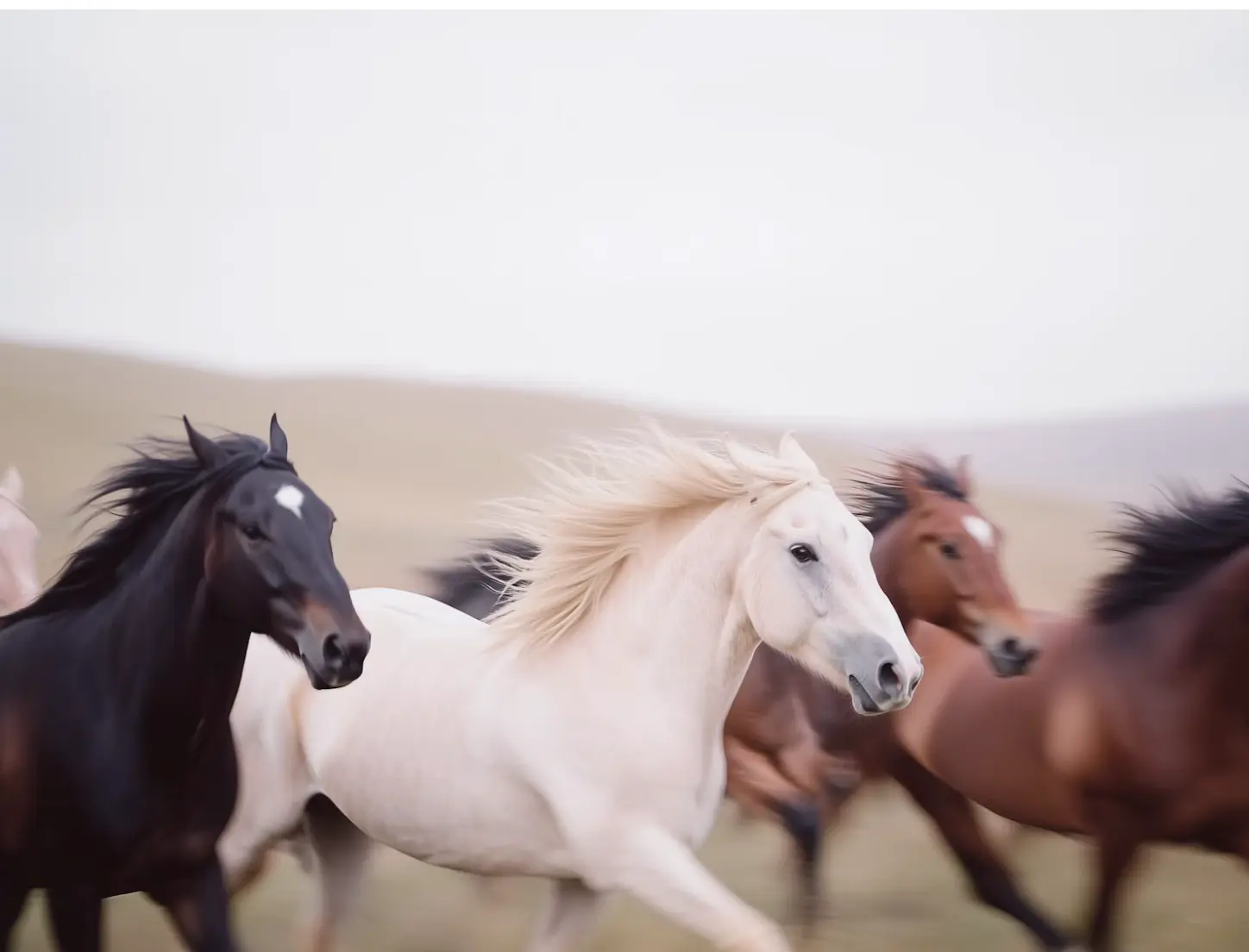
A herd of horses at full gallop across open grassland, black, bay, chestnut and white, in motion blur.

The premise

Athletic performance creates physical demand.

“The biomechanics of the horse allow for graceful, powerful movements unique to their intended event.”

Sarah A. Reed, “Horses as Athletes: The Road to Success,” Animal Frontiers, 2022. Read the article

“The skeletal system also has a critical role in equine performance, as it withstands the stressors placed on bones and joints.”

  1. The horse is an athlete
  2. Performance creates physical demand
  3. Recovery deserves a place in the program
  4. PHAETHON

This article establishes that the horse is an athlete. It does not evaluate PHAETHON or red-light therapy.

The athletes

Different horses.
Different demands.
One recovery system.

Horses at a gallop in close view, a black horse and a white horse leading a bay and a chestnut, grassland blurred behind.
  • Power and presence

    Friesian

    A powerful black horse, with neck, shoulder, back and hindquarter muscle carrying the work.

  • Athletic sport horse

    Knabstrupper

    A spotted sport horse bred for athletic movement.

  • Dressage. Jumping. Eventing.

    Warmblood / sport horse

    A lean, powerful competition type, built for the repeated demands of the arena and the field.

  • Sport build, Friesian character

    Friesian sport horse

    An athletic sport-horse build that carries Friesian characteristics.

The people

For owners who develop the athlete.

The program already has a place for training, nutrition and care. Recovery belongs there too.

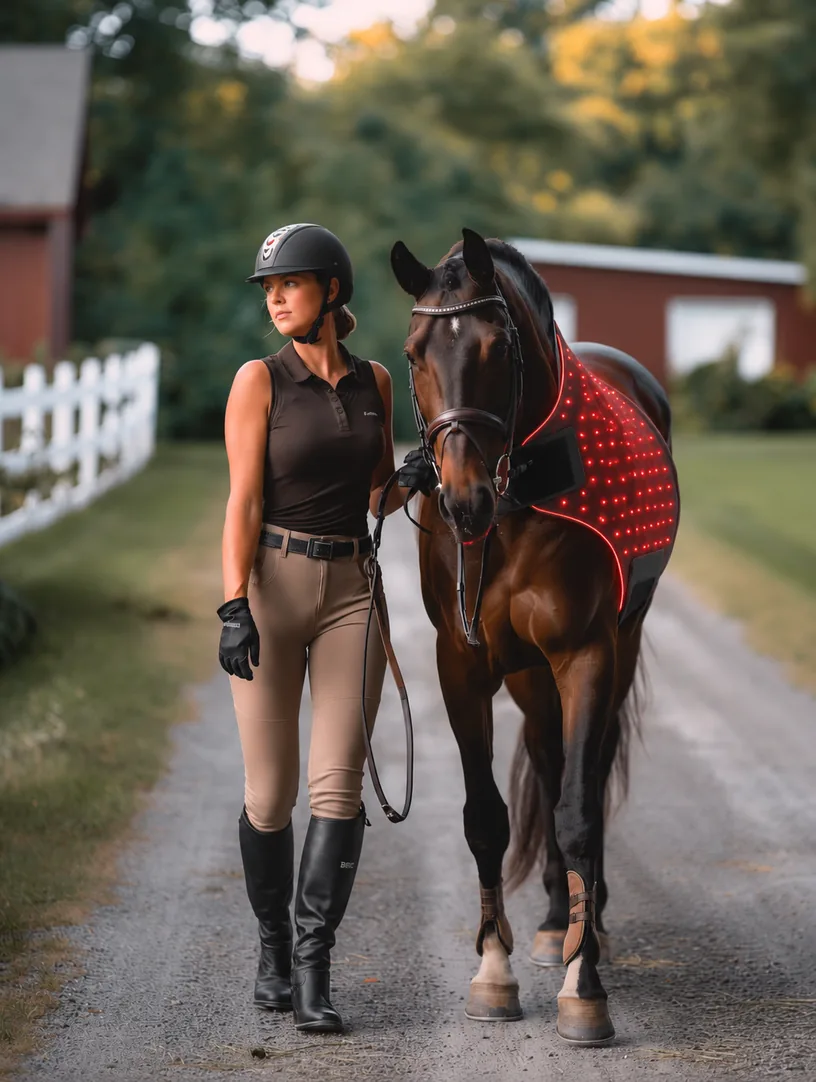
A rider in a helmet, breeches and tall boots walking a dark bay horse in a bridle along a gravel lane past a red barn. The horse wears the wireless PHAETHON neck-and-shoulder wrap with a soft red LED glow. Conceptual image.
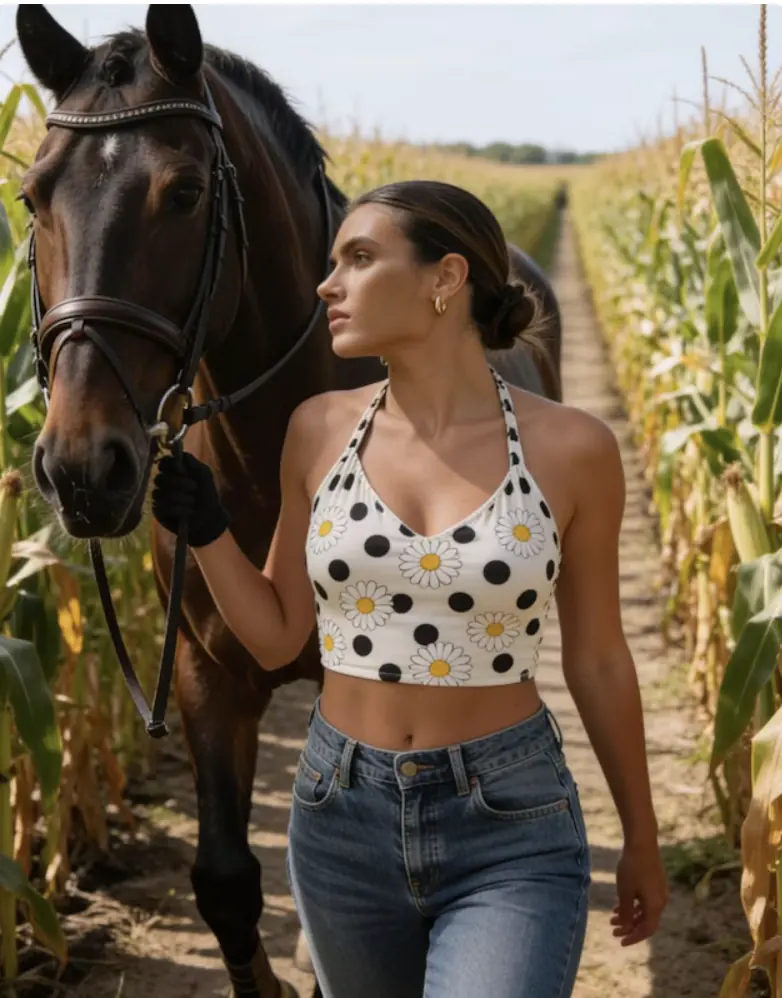
A woman leading a dark bay horse in a bridle along a path between rows of corn.
A horse wearing the PHAETHON panel, its red light emitters glowing across the shoulder and barrel.

02The light

Red light, applied with intent.

Photobiomodulation is the use of low-level red and near-infrared light on tissue. PHAETHON Equine Red-Light Therapy is the application of that idea, designed around the horse.

The product

Built around
the horse.

A contoured panel with the light array on the inside, and the straps and control on the outside.

The PHAETHON Equine Red-Light Therapy wrap laid flat. Above, the illuminated inner side with a grid of red LEDs, labelled 71.6 in wide, 29.9 in tall, with 7.4 in and 27.5 in straps. Below, the grey outer side with its fastening straps and a single control button.
Inner light array above, outer side below.Swipe to inspect the dimensions.

03Examined

PHAETHON, examined.

Complex technology. Simple recovery experience.

The PHAETHON equine red-light system on a bay horse: a panel of red light emitters across the shoulder and barrel.
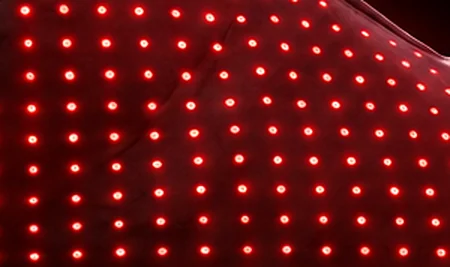
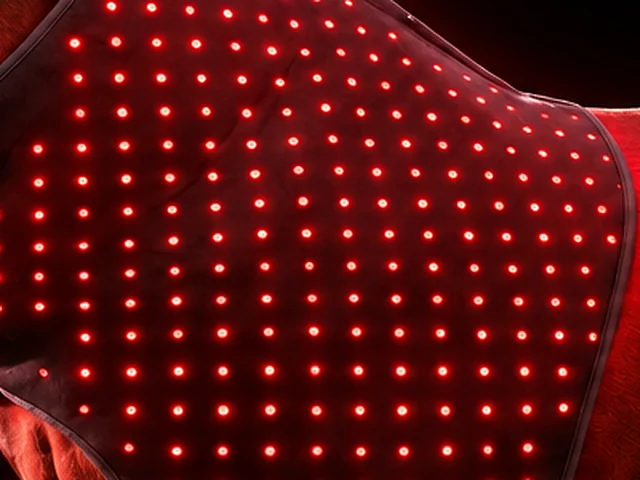
  • Close view of a regular grid of glowing red emitters on a dark panel.

    660 + 850

    Red + near-infrared

    660 nm visible red and 850 nm near-infrared light in one integrated array.

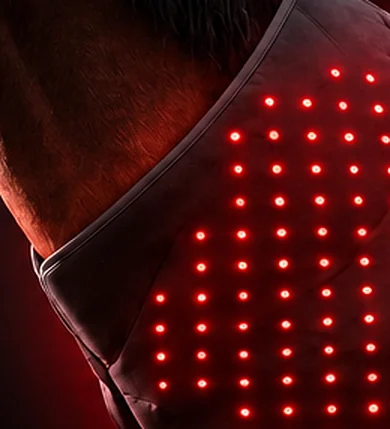
  • The panel's trimmed collar edge following the line of the horse's neck and shoulder.

    Engineered around the horse.

    The contoured form follows the shoulder and barrel, not a generic rectangular panel.

  • The horse with an outline showing the area the light array covers, from shoulder to barrel.

    182 × 76 cm

    71.6 × 29.9 in

    Large, equine-specific coverage.

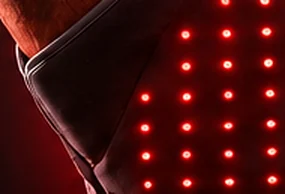
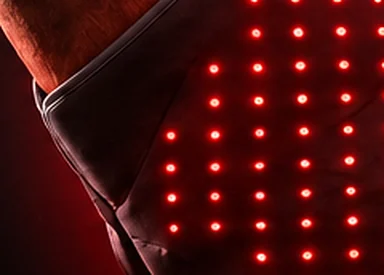
  • The dark fabric panel with a stitched, trimmed edge across the horse's shoulder.

    Built to flex.

    TPU over the LED array

    Gold-wire LED construction.

  • Designed for the horse.

    Its form, coverage and direct-contact light array were developed around equine application.

04PHAETHON Equine Red-Light Therapy

Engineered
in detail.

A horse's routine is already complex: training, conditioning, travel, grooming, care, recovery. Complex technology. Simple recovery experience. PHAETHON brings the technology into a form designed around the horse and the routine surrounding it.

Close view of a regular grid of glowing red light emitters set into dark fabric.

01

Light emitters

A regular grid of red and near-infrared emitters.

348 LED diodes · 1,044 light chips

The collar edge of the panel following the line of the horse's neck and shoulder.

02

Equine fit

Following the line of the neck and shoulder.

The trimmed, stitched edge of the panel against the horse's coat.

03

Edge and construction

Built to flex, with TPU over the LED array.

The full panel on the horse with its outline traced in red light, from the neck to the barrel.

04

Panel contour

From its contoured form to its direct-contact light array, designed around equine application.

04Simple controls

Press. Light.

One control selects the light. Another sets the mode.

15 minutes.

Then PHAETHON turns itself off.

A built-in timer automatically ends the session after 15 minutes.

Technical specifications
Product
PHAETHON Equine Red-Light Therapy
Wavelengths
660 nm red · 850 nm near-infrared
LED diodes
348
Light chips
1,044
Chip architecture
1 × 660 nm + 2 × 850 nm per diode
Dimensions
182 × 76 cm · 71.6 × 29.9 in
Rated power
174 W
Modes
Steady · Pulse
Light selection
Red + NIR · Red · NIR
Timer
15 minutes, automatic shutoff
Charging
USB Type-C
LED covering
TPU
Irradiance
140 mW/cm² at 0 inManufacturer/supplier specification. Not independently measured by PHAETHON.
The PHAETHON panel on a bay horse, its outline traced in red light from the neck across the shoulder to the barrel.

Neck

Shoulder

Barrel

05Design

On the
horse.

The panel follows the neck and spans the shoulder and barrel.

How the light reaches

Light, to depth.

ExteriorThe athlete, wearing PHAETHON.

ActivationRed and near-infrared LEDs light the panel.

SkinThe light meets the skin first.

MuscleBeneath the surface, the muscle that does the work.

DepthLonger wavelengths generally travel further into tissue, so near-infrared is shown reaching deeper than red.

RecoveryBuild recovery into the program.

Conceptual illustration. Not to scale. It does not measure the performance of PHAETHON.

Where recovery matters

Recovery is part of performance.

A dark bay horse in a paddock beside a wooden fence and red barn, wearing the wireless PHAETHON neck-and-shoulder wrap with a soft red LED glow. Conceptual image.
  • Pre- and post-performance recovery

    Recovery sits on both sides of the work: before it, and after it.

  • Muscle recovery and soreness support

    Movement is powered by muscle. Photobiomodulation is an area of ongoing research in muscle recovery.

  • Joint comfort

    Joints carry the load of every stride. Photobiomodulation is studied in connection with joint comfort.

  • Circulation and tissue support

    Photobiomodulation is studied for its relationship to circulation and tissue. Research is ongoing.

  • Cellular energy and natural recovery processes

    Photobiomodulation research often focuses on cellular energy and the body's own recovery processes.

General photobiomodulation research is separate from claims about any specific device. PHAETHON does not diagnose, treat, cure or prevent any condition and is not a substitute for veterinary care.

07The science

Understand the light.

Photobiomodulation is the general field of study. Product specifications are kept separate from scientific evidence.

01The technology

Photobiomodulation (PBM), also called red-light or low-level light therapy, is the use of low-level red and near-infrared light on tissue. It is a general field of study across species and applications.

This describes the field. It is not a statement about any specific product.

02The specification

  • 660 nmRed lightVisible to the eye
  • 850 nmNear-infrared lightNot visible to the human eye

These are product specifications. They are not statements about research outcomes.

A bay horse wearing the PHAETHON panel, red light emitters glowing across the shoulder and barrel.

PHAETHON

Engineered
for longevity.

The PHAETHON panel on a bay horse, red light emitters across the shoulder and barrel.

PHAETHONEquine Red-Light Therapy

Price: $649

Equine-specific coverage. Dual-wavelength light. Simple controls. Automatic 15-minute sessions.

  • 660 + 850 nmRed + near-infrared
  • 348LED diodes
  • 182 × 76 cmEquine-scale coverage
  • 15 minAutomatic timer

One-time purchase. PayPal checkout. No subscription.

Equine Red-Light Therapy

The horse is an athlete.
Recovery is part
of the program.

Engineered for longevity.